
Beyond Pain: Redefining Strength Through Qigong
Dec 17, 2025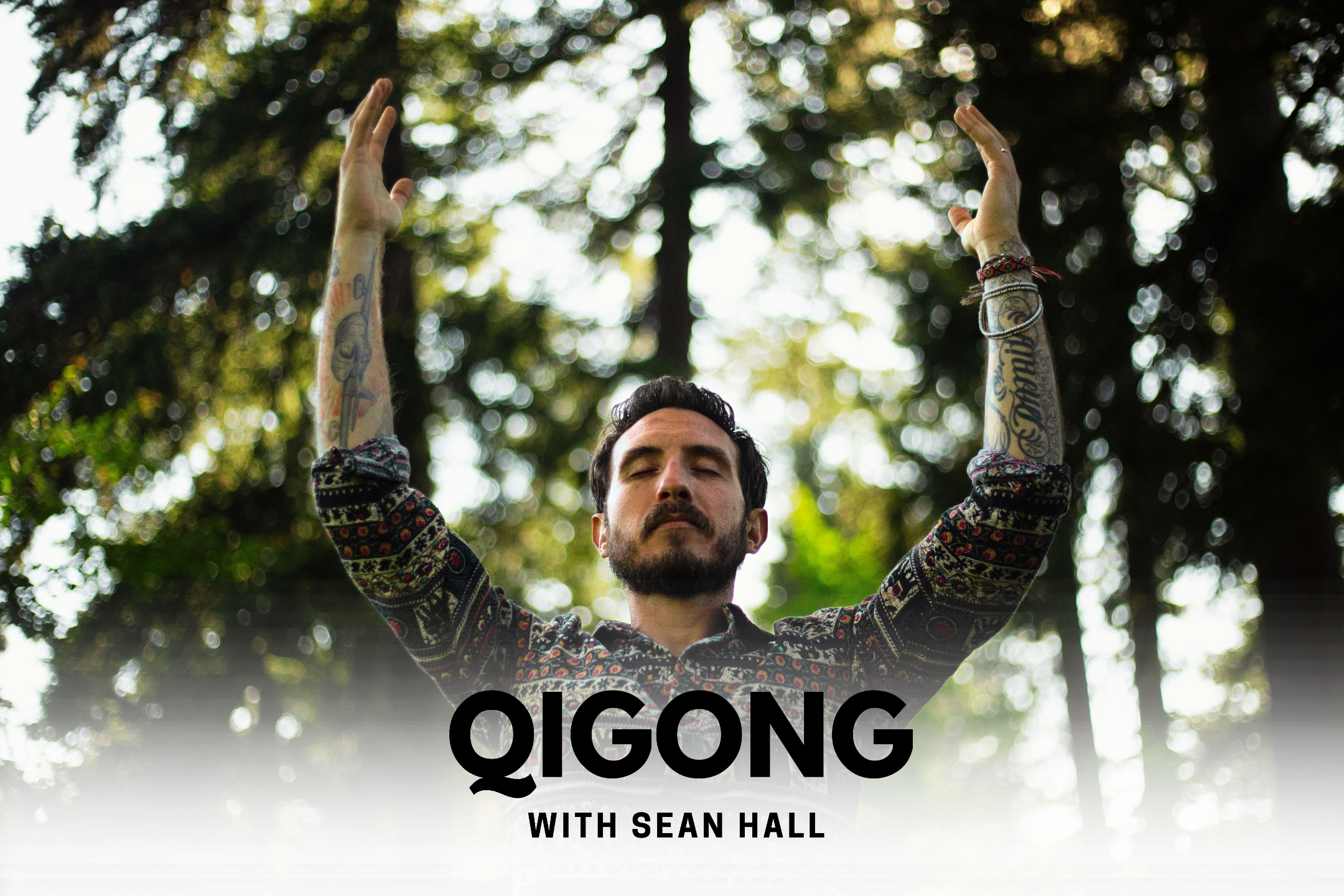
If you want to live pain-free, you need more than just strength. You need flexibility, resilience, and balance. Yet most approaches to training miss these principles entirely. Stretching routines often push us to overstretch, leaving muscles torn and strained. Conventional weight training, on the other hand, easily leads to overloading the muscles until something gives. Both paths promise strength but often deliver injuries, long recoveries, and endless frustration.
I know this pattern well. I lived it. Like many, I learned to push through pain. If discomfort showed up, I gritted my teeth and forced my way forward, believing that’s how growth happened. And sure, improvement often requires moving past comfort zones, but just as I learned from studying with my Qigong master, the way we approach that edge matters. For years, my way only led me deeper into injury and chronic tension. My knee, in particular, became the obstacle I could never get around. Instead of climbing higher, it felt like I was stuck at the base of my own mountain, staring at the summit, but unable to take a single step closer.
What I didn’t yet realize was that real strength wouldn’t come from forcing my way through obstacles—it would come from listening, softening, and learning to move with ease. That shift would eventually carry me not just into recovery, but to the top of an actual mountain.
The Butterfly Stretch Gone Wrong
I still remember my first Taekwondo class and the infamous “butterfly stretch.” The whole class sat with feet pressed together and knees dropping toward the floor. My knees? Nowhere near the ground. My instructor decided to “help.” He came up behind me, grabbed my knees, and forced them down. I heard a popping sound in my knee while a searing pain shot through my groin, and tears filled my eyes. Instead of compassion, he got angry—turns out he wasn’t exactly a blackbelt in patience. Furious at my reaction, he punished me by making me lead the class in front kicks.
On the outside, I kept composure. On the inside, my inner thighs remained tight for weeks, making my kicks even worse. That moment planted the seeds of chronic hip and knee tension that would follow me for years. What my body needed was balance and careful attention to the edge of my comfort zone but instead my body was forced—and forcing only deepened the underlying weaknesses.
From Skateboards to Hot Yoga
Life kept testing the same weak points. In my 20s, I decided to pick up skateboarding again. For a kid who wasn’t the most athletic, skateboarding wasn’t just my pastime—it was my chance to prove I had some edge. To even land a trick, your legs have to absorb enormous force, and to get back up, you need spring-loaded power. And then there’s the art of falling. Any skater will tell you: everyone falls. The difference between hobbling home and dusting yourself off is all in how you land. Done well, falling becomes a kind of survival dance, equal parts awareness and grit.
Of course, my body had other plans. One bad fall sent my knee crashing against a curb, swelling it to the size of a grapefruit. Heat helped, and when I eventually discovered hot yoga, I thought I had found the cure. For a while, it worked. My knee felt better, and I loved the intensity and challenge of the practice. But outside the hot room, the tension always returned.
Fast forward 15 years: I was teaching a class, demonstrating toe pose. To me, toe pose was the ultimate demonstration of strength, flexibility, and balance—balancing on one bent knee with all body weight perched precariously. But in one instant, my knee gave out. Pain surged, my leg wouldn’t straighten, and I had to finish class hiding my limp behind students. That injury left me bedridden and searching for answers.
Tea with My Master
Eventually, I visited my Qigong master in Oregon, hobbling in on crutches. I asked for hands on healing, and instead, he asked me to bring him his tea. I looked over to where his tea was on the counter. About 10 feet away on his desk the tea cup brimmed so full it had a dome of liquid clinging to the top like a dare.
I laughed nervously, explaining I could barely walk. He calmly replied, “I’m in no hurry, are you?”
So there I was, about to risk third-degree burns, a bruised ego, and possibly his carpet. My hands shook as I picked up the cup, and off I went, wobbling like a contestant in the world’s slowest obstacle course. Pain jolted up my leg, tea sloshed, and my ego braced for disaster.
From across the room came his calm reminder: “What’s your hurry?”
Right, slow down. I softened my shoulders, bent my knees, and held the tea at my centerline just as I had done in my qigong practice countless times before. As I took mindful steps toward him all the principles my master had taught me came into focus. To my surprise, by the time I reached him, I wasn’t limping or in pain at all. He smiled, accepted the cup, and asked with perfect timing: “How’s the knee?”
In that moment, I understood. My injury wasn’t purely structural; it was functional. My body wasn’t asking for more force. It was asking me to slow down and truly listen.
Listening to the Subtle Cues as in my Qigong Practice
For years, I thought strength meant pushing harder, muscling through pain, and bulldozing past my body’s warnings. But my knee injury forced me to confront the truth: that approach was breaking me down, not building me up.
When my master handed me that tea cup, it was the first time I really understood that strength had less to do with grit and more to do with grace. Instead of forcing or manipulating tense muscles, I used my qigong practice to slow down, listen and meet my muscles where they are. By gently supporting the body’s needs rather than fighting them, the muscles relax, balance returns, and real strength builds. My old way of living was rigid, tense, and brittle. Now, just as in my qigong practice, real lasting strength, is rooted in relaxation, alignment, and responsiveness.
Bit by bit, I began rebuilding, not just my knee, but my perspective. I trained myself to ground before acting, to listen before moving, to relax before responding. As I did, my body transformed. Movements that once left me hobbling now flowed with ease. My knee, once my greatest liability, became a reminder of what resilience really means: the ability to relax under pressure, adapt, and respond without forcing. And soon, I would discover just how far that lesson could take me…all the way to the summit.
The Summit
The payoff was more than recovery. Six months after my devastating injury, I stood at the base of Mt. St. Helens, nervous but determined. The climb itself felt symbolic. I knew the ascent would test my stamina, but it was the descent I feared most. Every step down threatened to undo the progress my body had made.
So I leaned on what my journey had taught me. Step by step, I listened. I softened when tension crept in, adjusted when my breath grew shallow, and trusted the feedback of every muscle and joint. By the time I reached the summit, the view hit me harder than the altitude: I realized I wasn’t just standing on a mountain, I was standing inside a moment of clarity. Strength wasn’t about gritting teeth or pushing harder; it was about aligning with my body, honoring its signals, and going with the flow.
On the way down, something remarkable happened. The knee that once betrayed me held strong. Instead of bracing against every step, I moved lightly, responding in real time to what my body told me. No limping, no collapse, just steady, grounded movement.
That day, I carried a new kind of strength: one that didn’t burn out but endured.
Now, as I face new mountains, both literal and metaphorical, I trust myself in a way I never did before. The terrain may shift, the weather may change, but I no longer force my way through. Instead, I move with curiosity, ease, and flow. And in that practice, I’ve found what I was chasing all along: true strength, flexibility, resilience, and balance.
Ready for the next step?
With the help of coaching you’ll be guided step by step into discovering how to become grounded, centered and pain free.
Stay connected with news and updates!
Join our mailing list to receive the latest news and updates from our team.
Don't worry, your information will not be shared.
We hate SPAM. We will never sell your information, for any reason.